

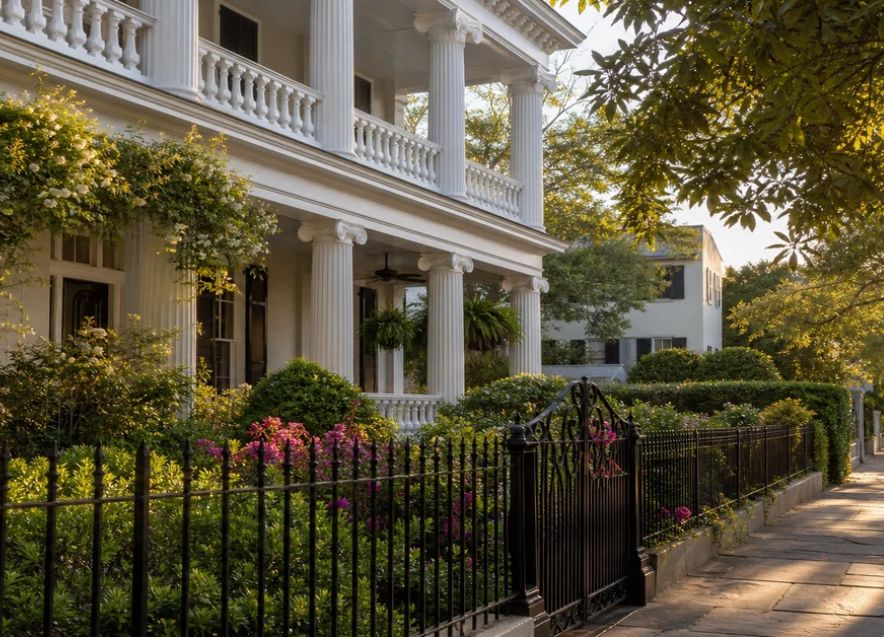
Charleston is one of the most architecturally rich cities in the country. Its historic homes — many built in the 1700s and 1800s — are a defining part of what makes this city worth preserving. But owning one of these properties comes with a responsibility that goes well beyond a standard renovation.
Historic restoration is a specialized discipline, and approaching it the wrong way can cost you time, money, and the very character that made the home worth restoring in the first place.
At O’Connor Homes, historic restoration and rehab is one of our core services. We’ve spent years developing the skills, the subcontractor network, and the problem-solving instincts that this work demands. This blog is designed to give historic Charleston homeowners a clear picture of what to expect and what to look for before you begin.
Historic Restoration Is Not the Same as a Standard Renovation
The most important thing to understand from the outset is that restoring a historic home requires a completely different approach than a conventional renovation. The materials, the techniques, and the mindset are all different.
Older homes were built with methods and materials that simply don’t exist in today’s supply chain. Original plaster walls, old-growth timber framing, hand-forged hardware, single-pane windows, and masonry constructed without modern reinforcement all require specialized knowledge to work with and around. A contractor who is accustomed to working in new construction or modern renovations won’t automatically know how to handle these conditions, and getting it wrong can damage irreplaceable elements of the home.
At O’Connor Homes, every subcontractor we bring onto a historic project has been vetted for experience with historic materials and methods. Retrofitting modern plumbing into a home with original plaster ceilings, for example, or upgrading electrical systems without destroying original millwork — these are skills that take years to develop. We don’t learn on your home.
Charleston’s Historic Districts Have Strict Preservation Guidelines
If your home sits within one of Charleston’s historic districts or is listed on the National Register of Historic Places, any exterior work will be subject to review by the Board of Architectural Review (BAR). This is not a bureaucratic inconvenience. It’s a protection for the character of your community and the value of your property.
What this means in practice is that changes to windows, doors, rooflines, siding, porches, and other exterior features must meet specific standards. Replacement materials must match the original in appearance and, in many cases, in material composition. This requires sourcing specialty products and working with suppliers who understand preservation-grade standards.
Permit timelines for historic projects can also run longer than standard renovation permits. A contractor who doesn’t build that into the project schedule will find themselves behind before the first nail is driven. We factor these realities into every project plan from the beginning.
Every Time You Open a Wall, You Should Expect the Unexpected
This is perhaps the single most important thing homeowners need to understand about historic restoration: surprises are part of the process. Behind original plaster walls, beneath old flooring, and inside aging rooflines, there are often decades of deferred maintenance, previous repairs done without permits, and deterioration that wasn’t visible from the surface.
We’ve encountered knob-and-tube wiring hidden inside walls long assumed to be updated. We’ve found water damage behind original beadboard that showed no outward signs. We’ve opened floors to discover structural members that needed sister framing before any finish work could begin.
This doesn’t mean a historic restoration project has to spiral out of control. It means it has to be managed by someone who anticipates contingencies, builds appropriate buffers into the budget, and communicates clearly with the homeowner every step of the way. That’s what we do. We don’t get rattled by the unexpected — we plan for it.
The Goal Is Preservation, Not Replacement
One of the most common mistakes homeowners make in historic restoration is replacing original features when restoration would have been more appropriate and more valuable. Original hardwood floors, hand-carved millwork, historic windows, and decorative plaster details are what give these homes their character. Once they’re gone, they’re gone.
Whenever it’s structurally and practically possible, our approach is to restore rather than replace. Original windows can be weatherstripped, reglazed, and fitted with interior storm inserts to improve energy performance without losing the original sash. Original floors can be refinished, patched with reclaimed material, or repaired board by board. Original millwork can be stripped, repaired, and repainted to look better than new.
When replacement is unavoidable, whether it’s because a feature has deteriorated beyond repair or because a modern code requirement demands it, we work to source materials that match the original as closely as possible in profile, species, finish, and character.
Budget Honestly for What This Type of Work Costs
Historic restoration typically costs more per square foot than standard renovation work. The materials are more expensive, the labor is more specialized, the permitting process is more involved, and the contingency buffer needs to be larger. Homeowners who enter a historic project expecting standard renovation pricing will be disappointed — or worse, will end up with a contractor who has cut corners to hit a number that wasn’t realistic to begin with.
At O’Connor Homes, we give honest estimates based on the actual scope of the work. We walk through the property in detail before providing a number, we identify the areas of greatest risk, and we make sure you understand what is known versus what may be discovered as the project progresses.
We’d rather have a harder conversation upfront than deliver bad news mid-project.
Why the Right Contractor Matters More on Historic Projects
On a standard renovation, a mistake can often be corrected. On a historic home, a mistake may be irreversible. That’s why selecting the right contractor is even more important when historic preservation is involved.
Look for a local contractor who:
- Has documented experience with historic restoration specifically in the Charleston area
- Uses subcontractors who are experienced in historic methods and materials
- Understands the BAR review process and has navigated it before
- Is transparent about contingency planning and budget risk
- Can show you completed historic projects in the region
At O’Connor Homes, we check every one of those boxes. Our team has worked on some of Charleston’s most distinctive historic properties, and we approach every project with the same level of care and craft that the home deserves.
Start the Conversation Before Your Historic Home Restoration in Charleston, SC
Historic restoration projects benefit enormously from early planning. The more time you have to work through permitting, material sourcing, and project sequencing before construction begins, the smoother the process goes. If you’re thinking about restoring a historic home in Charleston or the surrounding area, we encourage you to reach out early, even if you’re still in the early stages of planning.
Contact O’Connor Homes today to talk through your project. We’ll help you understand what’s involved, what it will take, and how to approach it the right way from the start.