

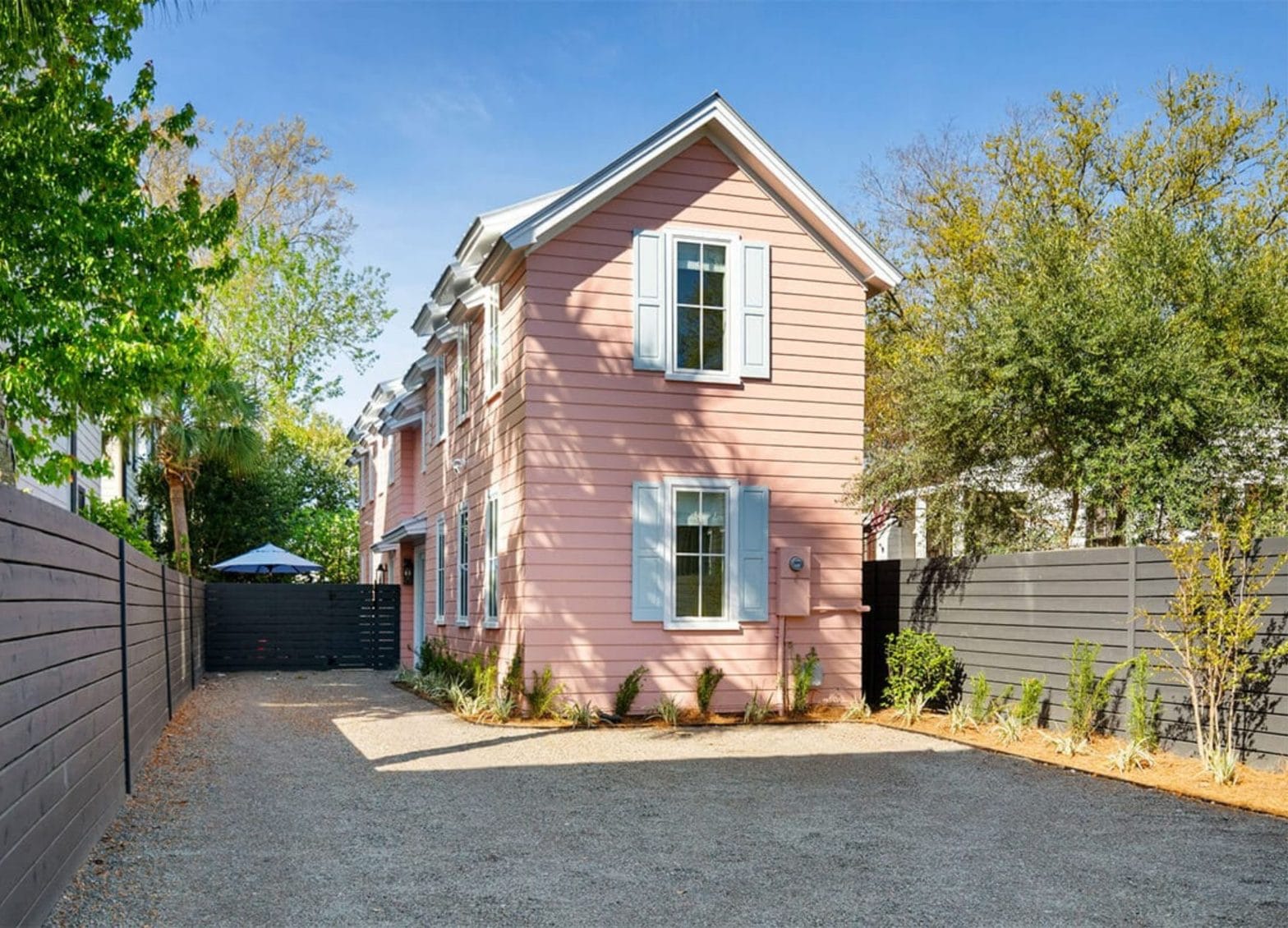
At some point in a home search, most Charleston families face a fork. There’s a nearly finished house available now, with a known price and a move-in date you can plan a school year around. And there’s the alternative: a lot, a set of drawings, and a custom house designed around how your family actually lives.
Neither choice is the safe one by default. A spec home can be an excellent value and an easy transaction. It can also lock you into a layout you’ll spend a decade adapting to. A custom build can deliver exactly the house you want, or stretch your patience if you need to move in four months.
The decision comes down to four things: your timeline, your budget structure, how specific your needs are, and how much control you want over what’s behind the walls.
What a Spec Home Gives You
Speed and certainty are the real product. The house exists or nearly does, so you can walk it, see the finishes, get a price, and close on a schedule. For a family relocating to the Lowcountry, selling a current home, or working around a school calendar, that alone can decide it.
Decision load is lighter, too. Custom building asks hundreds of questions, and not everyone wants to answer them. With a spec home, someone already did.
The trade-off is fit. The floor plan, the kitchen layout, the primary suite location, and the finish choices reflect a builder’s read on the market, not your household. If your needs are mainstream, that works. If they aren’t, you’ll notice quickly. A completed house also hides its own construction, so inspection and understanding who built it matter more than usual.
What a Custom Build Gives You
Control, in the places that are hardest to change later. Your floor plan follows your routines — where you enter with groceries, how the mudroom handles kids and sand, whether the kitchen opens to where people actually gather, and whether a home office needs to be quiet.
Custom also lets you choose materials and detailing with Charleston’s climate in mind: window quality, flashing and drainage details, porch construction, corrosion-resistant hardware, and finishes that survive humidity and salt air. Those decisions are inexpensive to make well during design and expensive to correct after the fact.
Then there’s the lot. If you already own land, want a specific street, or you’re looking at an infill site downtown or a parcel near the water, custom is the only path that fits the house to the site rather than the reverse.
Cost, Timeline, and Resale
- Cost. Spec homes generally carry a lower and more certain price because the builder controlled scope and selections. Custom projects cost more and require budgeting for land, design and engineering, permitting, construction, and a contingency. What you get for the difference is fit and finish level, not square footage.
- Timeline. A spec home moves at the speed of a real estate closing. A custom build runs on design, permitting, and construction, and permitting alone can take months depending on the jurisdiction and whether historic review applies.
- Resale. Spec homes are built to appeal broadly, which can help resale. Well-built custom homes hold value on quality and location, though highly personalized choices narrow the buyer pool. If you plan to stay a long time, weigh daily livability over hypothetical resale.
- A third option. Some families are already in the right location and simply need the house to work better. A major renovation or addition can deliver custom-level fit without giving up a neighborhood you already love.
How to Decide Without Second-Guessing It
Write down your hard requirements first — the things you won’t compromise on, like location, number of bedrooms, single-level living, workspace, or storage. Then walk available spec homes with that list in hand. If a spec home meets your requirements, buying it is usually the efficient choice.
If nothing meets the list, or you keep mentally renovating each house you tour, that’s your answer. Bring in a builder early, before drawings are final, so cost-driving decisions surface on paper.
At O’Connor Homes, we build new custom homes and take on major renovations and historic work across Greater Charleston. We limit our workload to a select number of projects so each client gets real attention. We’ll tell you honestly if a spec home is the better move for your situation.
Frequently Asked Questions
Sometimes, if construction isn’t complete. Late-stage changes are limited and usually carry a premium, so confirm what’s still open before you make an offer.
Not automatically. Quality depends on the builder, not the model. Review the builder’s completed work, ask about materials, and get an independent inspection.
It depends on design, permitting, and lot conditions, and historic review adds time. Ask for a schedule tied to your specific site rather than a general estimate.
No, but have a builder walk any lot before you buy. Elevation, drainage, access, and setbacks can change a project’s cost substantially.
Spec homes offer lower upfront costs and price certainty. Custom homes and renovations can deliver better long-term value when the result fits how you live and is built for coastal conditions. Your timeline and how long you plan to stay usually decide it.
Let’s Figure Out Which Path Fits
If you’re weighing a spec purchase against building or renovating in the Charleston, South Carolina, area, a straightforward conversation will save you months.
Contact O’Connor Homes to talk through your lot, your list of must-haves, and the realistic path to the house your family actually wants.