

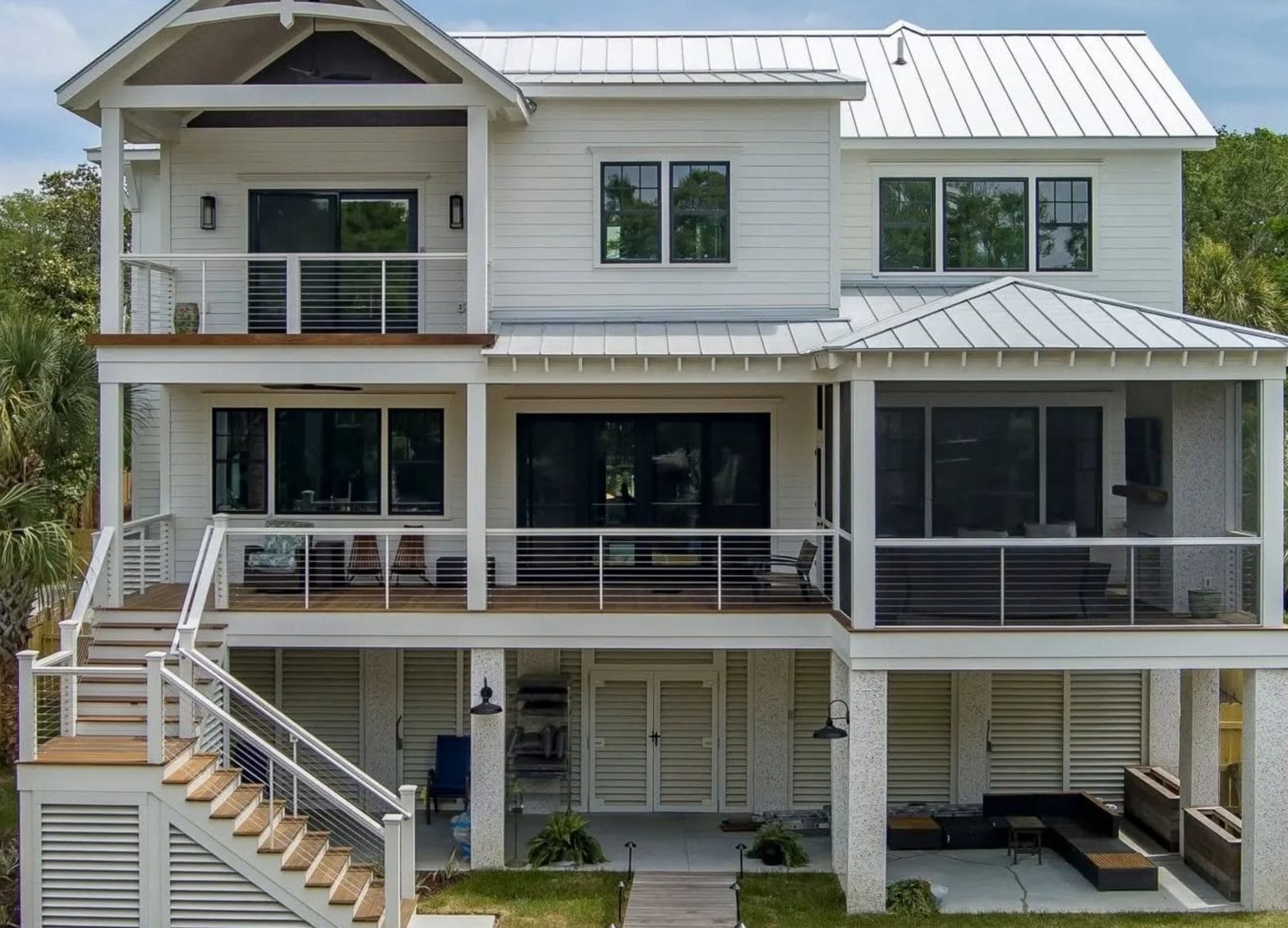
Drive through the Charleston area, and you’ll pass two very different kinds of new construction. One is a neighborhood of homes built from a set menu of floor plans, priced and scheduled with predictability. The other is a single house on a single lot, drawn for one family and built once.
Both approaches produce good homes. They just solve different problems. Production builders sell efficiency and certainty. Custom builders sell control and fit. Choosing wrong is expensive in either direction — you either pay for flexibility you never use or spend two years wishing you could move a wall.
Here is an honest comparison of how the two models differ on cost, control, timeline, lots, and the day-to-day experience, so you can tell which one matches your family and your site.
How the Two Models Actually Differ
- Design. A production builder offers a portfolio of proven plans with selected options — a bonus room here, an upgraded kitchen package there. A custom builder starts with your lot, your daily routines, and your budget, and the plan follows from that.
- Selections. Production selections come from curated packages, which keeps decisions fast and pricing tight. Custom selections are open, which means more freedom and more decisions to make.
- Lots. Production homes are usually built in developments on prepared lots. Custom homes in Charleston get built on the lot you choose, including infill sites downtown, waterfront parcels, and older neighborhoods where each site has its own constraints.
- Process. Production building is a repeatable system with volume purchasing behind it. Custom building is project management — coordinating design, engineering, permitting, and trades around decisions unique to your home.
Cost: Where the Comparison Gets Misread
Production homes generally carry a lower starting price, and that is real. Volume purchasing, repeated plans, and crews who have built the same house many times all reduce cost.
But the sticker price and the final price are different conversations. Option and upgrade packages, lot premiums, and landscaping can move a production home meaningfully upward. Buyers who upgrade heavily sometimes land close to a modestly scoped custom build — while still living inside a plan they couldn’t change.
Custom building costs more per square foot in most cases, and the value shows up in different places: a floor plan that suits how your family actually lives, materials chosen for coastal conditions, and detail work executed by carpenters rather than assembled at volume. If you plan to stay in the house for a long time, that difference compounds.
Which Fit Matches Your Situation
A production builder likely fits if:
- You want a firm price and a shorter timeline.
- You’re comfortable in a planned community.
- A stock plan works for your household.
- You’d rather make a handful of decisions than a hundred.
A custom builder likely fits if:
- You already own or want a specific lot.
- Your site has elevation, drainage, historic, or access considerations.
- You need a layout that no catalog plan delivers.
- You care about how the house is built as much as how it looks.
There’s a middle path worth naming, too. Many Lowcountry families are not building new at all — they love their location and need the house to work better. A major renovation or addition often delivers more usable value than starting over somewhere else.
What to Expect From the Custom Process in Charleston
Custom work here begins well before framing. Design and engineering, a survey, soil and elevation review, permitting, and — in historic districts — design approval all come first. Skipping that groundwork is how projects lose months.
Once construction starts, communication is the product. You should know what’s happening this week, what decisions are coming, and how any change affects cost and schedule. At O’Connor Homes, we work with local subcontractors we’ve built relationships with and limit our workload to a select number of projects at a time, which is how each client gets real attention rather than a slot in a queue.
Ask any builder you interview how many projects they run at once, who your day-to-day contact is, and how they handle problems they find mid-build. The answers tell you more than a portfolio does.
Frequently Asked Questions
Usually yes on a per-square-foot basis, though a heavily upgraded production home narrows the gap. Compare total delivered cost, including lot premiums, options, and landscaping.
Only within the options the builder offers. Structural changes are typically limited because the model depends on repeatability.
It generally does, largely because design, engineering, and permitting happen before construction rather than in advance of your involvement. Ask for a schedule built around your lot and jurisdiction.
Then a custom builder is the practical choice. Have the builder walk the site before design starts so elevation, drainage, and access shape the plan instead of surprising it.
Some can. Historic work requires specific experience with review processes and traditional detailing. Ask to see completed historic projects
Talk Through Your Lot Before You Commit
The right answer depends on your site, your timeline, and how much of the house you want to control. If you’re weighing a custom build in the Charleston area, contact O’Connor Homes and we’ll walk through your lot, your plans, and what the process would actually look like.